





























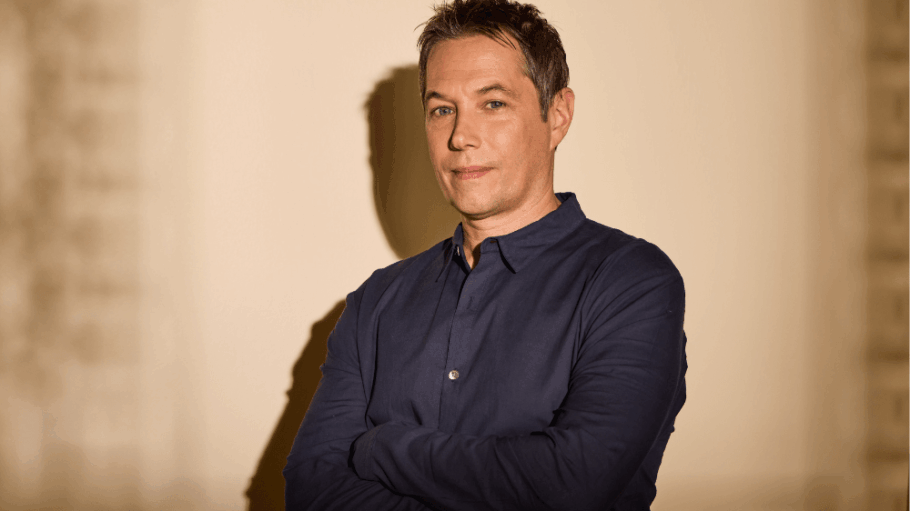
“Anora” director Sean Baker, who is at the Red Sea Film Festival as the head of the international jury, commented on the industry’s most burning current topic while speaking at the Jeddah-based event: Netflix agreeing to buy Warner Bros., including its film and TV studios, its gaming business, HBO Max and HBO.
The director said he “doesn’t think any of us should be commenting until we all know how [the deal] is going to play out,” but that “filmmakers have to put our foot down” when it comes to preserving three-month-minimum theatrical windows.
“We should not be reducing theatrical windows, we should be expanding [them],” he added. “This is how the filmmaker wants you to see his film, and everybody else can wait for it. My next film, I don’t care what happens, I’m gonna get a hundred-day theatrical window. That’s a little bit over three months, and I think that’s a good place at this moment. When you’re going directly to streaming, it diminishes the importance of a film. The theatrical experience elevates the importance. The way you present it to the world is a very important thing.”
Baker said he feels “hopeful” given that the biggest audience for “Anora” was Gen Z, despite a general perception that younger people don’t go for the theatrical experience these days. “That’s not true,” he said of that perception. “In L.A., when I go to movies, it’s usually Gen Z. I love that younger people are seeing the value in a communal experience and also one in which their focus is entirely on the film and not being distracted by everything else in the room.”
The American director, who made Oscars history earlier this year as the first person to win four Oscars in the same night for the same movie with “Anora,” said he will not “go for the next $150 million studio thing” as the next step in his illustrious career. Asked about what’s next following the Oscars prestige, he said: “The opportunities are there, whether [I’ll] take them or not, that’s the question.”
“Honestly, I’ve been in this world for so long,” he added. We got to a place with ‘Anora’ where I was working with such an incredible team that gave it their all and believed in the guerrilla way of making a film. And the outcome was incredible, so why not try to repeat that? I’m not gonna go for the next $150 million studio thing.”
Baker emphasized his next project will “probably be around the size” of “Anora” while also “staying in the [same] wheelhouse in terms of story and content.”
Love Film & TV?
Get your daily dose of everything happening in music, film and TV in Australia and abroad.

Asked whether he had time to digest his four Oscar wins yet, the director said he only managed to properly look back at that eventful night in the last month. Within 36 hours of Oscar night, he and wife-slash-producing-partner Samantha Kwan were on a plane to Tokyo for the Japanese release of “Anora,” going straight into Cannes for the world premiere of Tsou Shih-Ching’s “Left-Handed Girl.” The film, which he produced, edited and co-wrote, premiered at Critics’ Week and went on to be picked up by Netflix.
“There was no slowing down,” he said. “It’s a beautiful thing. We are really happy with what happened with ‘Anora’ because we never expected it. We went in thinking it was going to be the most divisive thing. When the Palme d’Or happened, that was my dream come true. I thought that was it, that was the win.” Then, while the director was on a plane back home, friends began texting telling him to “get ready for the next eight months of your life, it’s going to be crazy.”
“I almost had a nervous breakdown on the plane because I thought it was over,” he said. “It‘s been an incredible journey with this film and an incredible outcome.”
The director also spoke about being the head of the international jury at this year’s Red Sea Film Festival, saying what he “loves” about festivals that have competitions is how awards have a “major impact” on films and filmmakers. “I know that from personal experience. My career wouldn’t exist without film festivals.” Baker also highlighted how “meaningful” it is that the Saudi festival hands cash prizes of up to $100,000 to its top films.
“Independent film and film in general is a struggle, and I know my life was basically saved back in the day when I was winning cash awards when they still existed in the U.S. That’s a big thing for me,” added the filmmaker, going on to say that he “hopes” to “elevate new voices” while in the Arab region. “Whatever I can do to help. I needed help back in the day, and that’s what got me here.”
From Variety US