





























Much has been made in recent weeks about former Time Warner CEO Jeff Bewkes’ now-famous quip likening Netflix to Albania.
In 2010, Bewkes dismissed talk of Netflix challenging HBO’s dominance in premium TV as being akin to the potential for the “Albanian army to take over the world.” Well, Albania has risen. On Dec. 5, Netflix unveiled a megabucks merger agreement that many in the industry never thought they’d see. Netflix’s effort to takeover Warner Bros. and HBO Max is a vivid example of how dramatically the world has changed, and how quickly power dynamics can shift.
Netflix will have to fight for its prizes. Paramount Skydance CEO David Ellison will not go quietly; he launched a hostile takeover effort after being rebuffed by the Warner Bros. Discovery board in favor of Netflix.
But those of us with long memories can’t help wondering if it had to be this way for Warner Bros. Discovery — or WarnerMedia or Time Warner or AOL Time Warner, as the company has been variously known over the past 25 years.
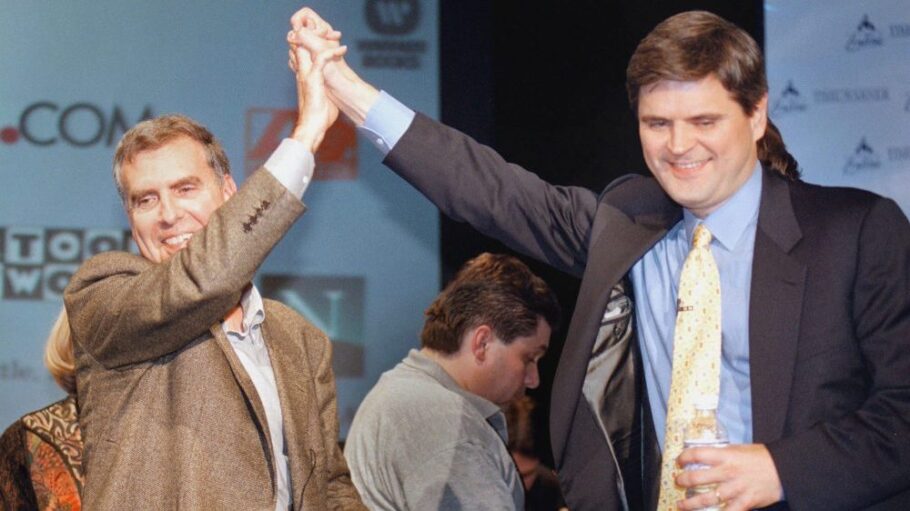
The sale to Netflix marks the first time that Warner Bros. and HBO will be subsumed into an existing entertainment brand. In 2018, when Time Warner was acquired by AT&T, the parent company had no other significant entertainment assets. The same was true in 2001 when AOL swallowed up Time Warner in a $100 billion deal that was then the biggest corporate merger (and eventually, one of the biggest slayers of shareholder value) of all time.
The merger mania of the past 25 years has its roots in an earlier landmark deal — the 1989 pact that brought Time Inc. and Warner Communications together as what was then the world’s biggest media conglomerate.
Steven J. Ross, the head of Warner who took the reins of the combined company, extolled the virtues of bringing Time Inc.’s unparalleled journalism brands and HBO together with a Hollywood studio. In each subsequent deal, the triumphant CEO has said basically the same thing: Bigger is better. One plus one will equal four, and oh, by the way, we can save money by eliminating overlapping operations (aka jobs).
Love Film & TV?
Get your daily dose of everything happening in music, film and TV in Australia and abroad.

But at this juncture, it seems like all that pressure on WB-HBO to be the biggest media concern and maintain its fearsome market share was what kept it from seeing the future — or recognizing that the Albanian army was starting to amass troops at the border.
By the mid-1990s, after it bought CNN and Turner Broadcasting, Time Warner became media’s equivalent of a financial institution that was too big to fail. The focus on maintaining that size and scale made it blind to innovation, even though each was meant to unlock wondrous new possibilities. HBO, to its credit, was a pioneer in making its shows available in an on-demand format on traditional cable, albeit with clunky technology. But both HBO and Warner Bros. were caught flat-footed by the consumer-friendly streaming revolution that Netflix ushered in more than a decade ago.
“The media industry should be embarrassed for their lack of imagination, guts and strategic thinking,” recently wrote analyst Michael Nathanson of MoffettNathanson, who worked at Time Warner in the early 1990s. “Time Warner had all the pieces to create the next great online business, the next great video streaming platform and even the next great streaming audio company,” Nathanson wrote. “What they had in world-class assets, they sorely lacked in managerial discipline, technology skills and an investor base willing to suffer deep losses to build these assets.”
As three big companies and one billionaire CEO go to war over this next chapter of the streaming wars, it’s high time to question the “bigger is better” model for media, given the track record.
Netflix, consider yourself on notice.
(Pictured: Former Time Warner CEO Gerald Levin and AOL chief Steve Case announce the AOL-Time Warner merger in January 2001)
From Variety US