





























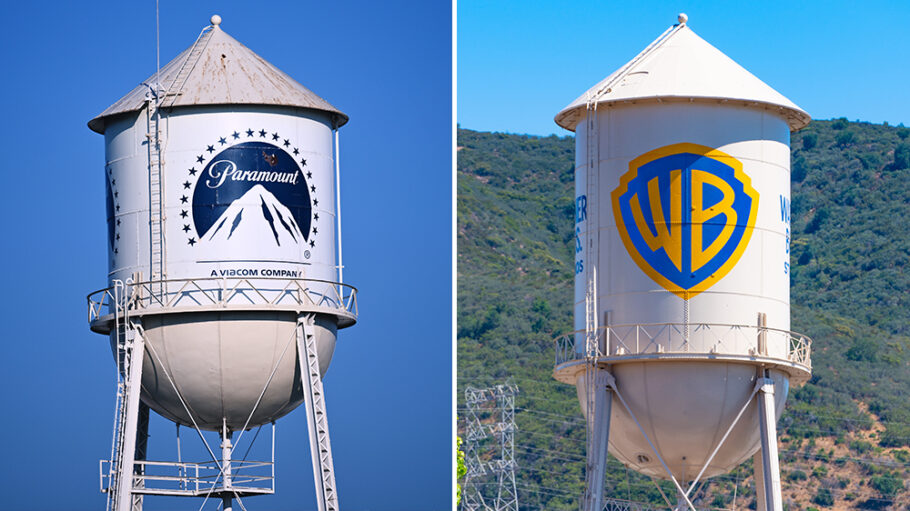
Two Democratic lawmakers — U.S. Reps. Sam Liccardo (D-Calif.) and Ayanna Pressley (D-Mass.) — have expressed “serious national security concerns” over Paramount Skydance‘s hostile takeover bid for Warner Bros. Discovery.
Liccardo and Pressley sent a letter Wednesday to Warner Bros. Discovery president and CEO David Zaslav and members of WBD’s board of directors. They also sent a copy of the letter to U.S. Treasury Secretary Scott Bessent. (Read the full letter below.)
A Paramount deal for WBD “could transfer substantial influence over one of the largest American media companies to foreign-backed financiers,” the U.S. representatives wrote.
Specifically, the U.S. representatives are concerned about Paramount’s takeover offer for WBD being backed by sovereign wealth funds of Saudi Arabia, Qatar and Abu Dhabi. The Saudi Public Investment Fund is controlled by Crown Prince Mohammed bin Salman. According to the representatives, “U.S. intelligence agencies have conclusively implicated Prince Salman in the brutal homicide of Washington Post journalist Jamal Khashoggi, to suppress dissent.”
Liccardo and Pressley also noted that Paramount’s bid for WBD is backed by Affinity Partners, the investment company formed by Jared Kushner, who is President Donald Trump’s son-in-law.
The lawmakers wrote that a future Democratic-controlled Congress or White House “will review many of the decisions of the current Administration, and may recommend that regulators push for divestitures, which would undermine the strategic logic of this merger.”
Reps for Warner Bros. Discovery and Paramount Skydance declined to comment.
Love Film & TV?
Get your daily dose of everything happening in music, film and TV in Australia and abroad.

On Monday, David Ellison’s Paramount Skydance launched a direct-to-shareholders hostile takeover effort for WBD, with its most recent bid carrying an enterprise value of $108.4 billion. That came after Netflix and Warner Bros. Discovery on Dec. 5 announced an $83.7 billion agreement, under which the streamer would buy WB’s studios, HBO, HBO Max and games divisions.
According to Paramount’s deal terms to acquire WBD, the three Middle Eastern sovereign wealth funds (Saudi Arabia, Qatar and Abu Dhabi) and Kushner’s Affinity Partners are backing the $30/share offer for Warner Bros. Discovery, along with David Ellison’s father, Oracle co-founder Larry Ellison; RedBird Capital Partners; and Apollo Global Management.
But the Arab wealth funds and Kushner’s Affinity “have agreed to forgo any governance rights — including board representation — associated with their non-voting equity investments,” Paramount said in an SEC filing. As such, the deal would not require review by the Committee on Foreign Investment in the United States (CFIUS), the government entity tasked with oversight and investigation of foreign investment in U.S. companies, according to Paramount. In addition, Chinese internet company Tencent, which had previously committed $1 billion toward the WBD takeover deal, is no longer a financing partner.
In their letter, Liccardo and Pressley demanded that WBD file a notice with CFIUS about the Paramount offer if it proceeds with that proposal. “CFIUS’s mandate is clear: The Committee evaluates how foreign investment could harm U.S. national security and seeks to address those risks,” the lawmakers wrote. “A transaction of this nature — combining a major media portfolio with foreign-backed capital — plainly warrants that scrutiny.”
“As one of the most influential media companies in the world, Warner Bros. Discovery shapes America’s news, entertainment, and cultural content like few companies on the planet,” Liccardo said in a statement. “Equally important, the company has private financial and personal data of tens of millions of Americans. We cannot allow powerful — and brutal — foreign-backed investors access to this trove of personal data, and to obtain influence over our nation’s news ecosystem, without full scrutiny mandated by the law.”
“Shareholders deserve a full accounting of the regulatory and reputational risks tied to this sale,” Liccardo said. “Anything less could lead to significant congressional oversight and forced divestitures under a future administration.”
The lawmakers requested a response from Zaslav to their letter by Dec. 22, 2025.
Read the letter from Reps. Liccardo and Pressley:
David Zaslav
President and Chief Executive Officer
Warner Bros. Discovery
230 Park Avenue South
New York, NY 10003
Dear Mr. Zaslav:
We write regarding recent reports that Paramount Skydance, supported by significant foreign investors, is pursuing a potential acquisition of Warner Brothers Discovery (“Warner”).
This transaction raises national security concerns because it could transfer substantial influence over one of the largest American media companies to foreign-backed financiers. If Warner proceeds with any transaction involving foreign sovereign or state-linked investors, we demand that the company immediately file a notice with the Committee on Foreign Investment in the United States (CFIUS) and submit the transaction for a full national security review.
A merger of this scale, involving two of the nation’s most influential media companies, carries implications far beyond ordinary commercial consolidation. Warner’s platforms reach tens of millions of American households through HBO, Max, CNN, Warner Bros. Pictures, Discovery, and numerous digital and cable properties. They also shape the news, entertainment, and cultural content consumed by the American public. Any transaction providing foreign investors with governance rights, access to non-public data, or indirect influence over content distribution creates vulnerabilities that foreign governments could exploit.
Public reporting indicates that Paramount Skydance’s financing includes substantial foreign participation, including sovereign-wealth capital funds and investors with documented ties to foreign governments. These investors include Emirati and Qatari funds, as well as Affinity Partners, a private equity fund founded by Jared Kushner and backed by a $2 billion investment from the Saudi Public Investment Fund. The fund is controlled by Crown Prince Mohammed bin Salman, whom (according to the declassified 2021 report of the U.S. Director of National Intelligence) ordered the murder of U.S. resident and Washington Post journalist Jamal Khashoggi.
These investors, by virtue of their financial position or contractual rights, could obtain influence — direct or indirect — over business decisions that bear upon editorial independence, content moderation, distribution priorities, or the stewardship of Americans’ private data. Even absent overt control, such influence can present a national-security threat when foreign state-linked entities have strategic interests inconsistent with those of the United States
Given these risks, Warner’s Board of Directors must treat this transaction not only as a commercial proposal but as a matter with substantial national security consequences. CFIUS’s mandate is clear: The Committee evaluates how foreign investment could harm U.S. national security and seeks to address those risks. A transaction of this nature — combining a major media portfolio with foreign-backed capital — plainly warrants that scrutiny. A failure to file with CFIUS when foreign investors may obtain control or meaningful contractual rights would represent a serious lapse in fiduciary judgment and could expose the company to significant regulatory and reputational harm.
Under Section 4565 of Title 50 of the U.S. Code, CFIUS jurisdiction to review acquisition of this nature arises under either of two grounds: a transaction which conveys “control” of the business to foreign actors, or an acquisition which could give non-controlling foreign entities access to Americans’ “sensitive personal data.”
CFIUS regulations define “control” broadly, and the law does not require the acquisition of a majority interest in the US business. Rather, CFIUS concerns arise where a foreign actor’s minority interests confer a significant ability to influence “important matters” related to the US business. Alternatively, the law authorizes CFIUS review where foreign entities could obtain access to Americans’ “sensitive personal data,” including viewing histories, behavioral profiles, frequently used passwords, credit card and financial data, and personal device and location information.
We therefore expect that, should Warner pursue negotiations with Paramount Skydance or any other buyer financed by foreign sovereign investors, the company will file a voluntary notice with CFIUS prior to executing any binding agreement. Moreover, if CFIUS identifies risks requiring mitigation, we expect Warner to commit to implementing those measures in full and to inform shareholders, Congress, and the public of the steps taken to safeguard national security. Future Congresses, moreover, will review many of the decisions of the current Administration, and may recommend that regulators push for divestitures, which would undermine the strategic logic of this merger. We urge the Board to weigh these national security and regulatory liabilities in evaluating a transaction burdened by uncertain but potentially extensive mitigation obligations, foreign influence risks, or adverse regulatory action.
The American public relies on Warner’s platforms for news, entertainment, and vital information. Allowing foreign-backed investors to obtain influence over this ecosystem without the fullest possible scrutiny would be irresponsible and dangerous. As stewards of one of the nation’s most important media institutions, the Board of Directors has a responsibility to ensure that any potential transaction protects both national security and the long-term interests of Warner Bros. Discovery’s shareholders.
Thank you for your prompt attention to this matter. We respectfully request a response to this letter by December 22, 2025.
Sincerely,
Sam T. Liccardo
Member of Congress
Ayanna Pressley
Member of Congress
CC:
Samuel A. Di Piazza, Jr., Chair of the Board
Richard W. Fisher, Director
Paul A. Gould, Director
Debra L. Lee, Director
Anton J. Levy, Director
Joey Levin, Director
Kenneth W. Lowe, Director
John C. Malone, Chairman Emeritus; Director
Fazal Merchant, Director
Anthony J. Noto, Director
Paula A. Price, Director
Daniel E. Sanchez, Director
Geoffrey Y. Yang, Director
David M. Zaslav, Director
Hon. Scott Bessent, Secretary, U.S. Treasury
From Variety US