





























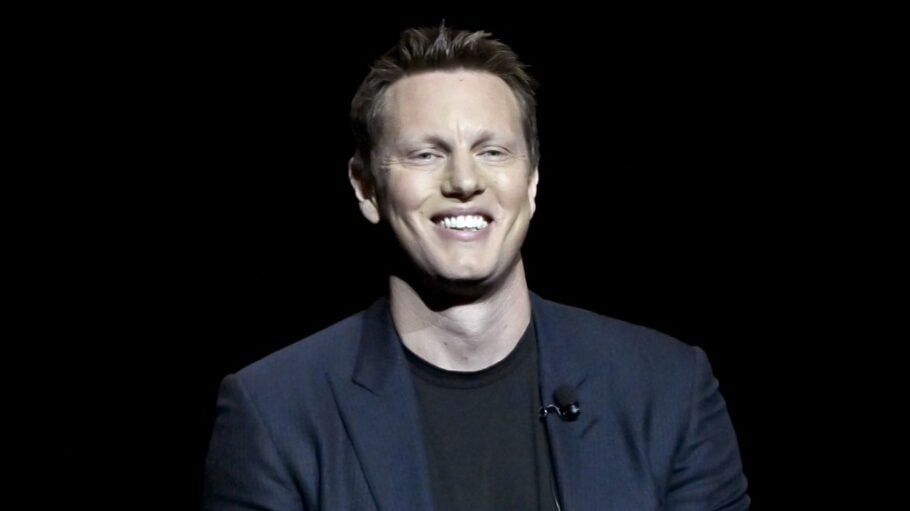
Paramount chief David Ellison, after a fierce year-long battle, is finally about to get his hands on Warner Bros. Discovery — in the most expensive takeover in Hollywood history.
On Wednesday, U.S. District Judge Araceli Martínez-Olguín, who is overseeing the antitrust case aimed at blocking the Paramount-Warner Bros. deal approved Paramount’s settlement with the 12 Democratic state attorneys general who brought the case to resolve the litigation.
Paramount has tentatively set next Tuesday, Oct. 6, to close the merger, according to regulatory filings.
The order approving the settlement by Martínez-Olguín was the final remaining barrier to Paramount’s debt-fueled $111 billion merger with Warner Bros. Discovery, after it had been cleared by regulators in 68 jurisdictions worldwide including the Justice Department.
“[T]he Court finds the proposed consent decree represents a reasonable factual and legal resolution of the dispute,” Martínez-Olguín wrote in her order. She determined that the proposed settlement agreement “reflects a procedurally sound resolution.”
“The parties reached their agreement following highly contested, however brief, litigation, and they reached their agreement following what they report to have been several rounds of in-depth negotiations,” the judge wrote.
The merged Paramount-WBD will bring together two of Hollywood’s biggest movie studios; the HBO Max and Paramount+ streaming services; and TV businesses including CBS, CNN, MTV, TBS, Comedy Central, Food Network and more. The new company’s entertainment franchises will span Harry Potter, “Game of Thrones” and other HBO hits, the DC Universe, “Yellowstone,” “Mission: Impossible,” “Top Gun” and the Nickelodeon kids’ empire.
Love Film & TV?
Get your daily dose of everything happening in music, film and TV in Australia and abroad.

On Wednesday, shortly after the judge OK’d the settlement, Paramount announced that Ellison has recruited Ynon Kreiz, who is stepping down as Mattel’s CEO, to be co-CEO at the combined Paramount-WBD. The merged entity’s businesses will jointly report to Ellison and Kreiz.
In addition to Kreiz’s hiring, some of the top leadership of the soon-to-be-merged company (whose name hasn’t been revealed at this point) is already taking shape. Casey Bloys, head of WBD’s HBO, is poised to assume oversight of the combined Paramount-Warner Bros. streaming business after Cindy Holland announced Tuesday she was stepping down from her role running Paramount+ and other direct-to-consumer.
With the deal close, Warner Bros. Discovery CEO David Zaslav is expected to depart. Zaslav stands to earn more than $550 million in stock and cash once the Paramount-WBD deal closes, including $34.2 million in cash severance payments. Other top WBD execs anticipated to exit include chief revenue and strategy officer Bruce Campbell and CFO Gunnar Wiedenfels.
Martínez-Olguín’s ruling came after merger opponents filed official objections with the court over Paramount’s settlement with the states. The consent decree includes no structural remedies (i.e., divestitures) as California Attorney General Rob Bonta, who led the coalition of states in suing to stop the looming merger, had previously insisted on.
Among the terms of the settlement: Paramount-WBD is prohibited from selling the Paramount Studios or Warner Bros. lots in the state for at least five years, and is obligated to invest at least an additional $300 million on film production in the U.S. annually. The combined Paramount-WB also must release at least 30 movies for theatrical distribution in the first two years (something Ellison has repeatedly promised he would do) and at least 32 in years 3-5, with a 45-day window for wide-release films. The merged Paramount-Warner Bros. also will be subject to monitoring by a “news editorial independence board,” which will establish “guiding editorial and journalism principles for” for CNN and CBS News.
Questioned by the judge last week about how the settlement addresses the state AGs’ concerns over fair competition in the three markets identified in the lawsuit — wide-release movies, tentpole movies and basic cable — Paula Blizzard, senior assistant attorney general for the antitrust section of the California Attorney General’s Office, said the reasoning was that the states were wary about permanently blocking the Paramount-WBD deal — and she said Warner Bros. Discovery, if it were denied the deal to merge with Paramount, would likely seek another M&A partner. “Sometimes we say, here are some remedies that will address the harm we see, but are not going to permanently change the structure by either completely blocking the merger or [requiring] divestment, and this is one of those cases,” Blizzard told the judge.
In her order, Martínez-Olguín wrote that she found that the proposed consent “includes important backstops requiring divestment of studios and/or cable channels in case of the combined entity’s failure to comply with the proposed consent decree’s terms. Further, the proposed consent decree imposes these requirements on film distribution and basic cable negotiations in the midst of a rapidly changing marketplace. The Court therefore finds that the proposed consent decree reflects a settlement between the parties that is a fair, reasonable, and good faith approach to address the competitive harms alleged in the Complaint, and does not violate the law or public policy.”
The groups behind the #BlockTheMerger coalition, for one, filed an amicus brief with the court urging Martínez-Olguín to reject the settlement. The League of United Latin American Citizens also raised objections to the deal in a filing, saying the combined Paramount-WBD will potentially invest less in productions about Black and Latino communities than two independently competing studios would.
Previously, the judge also had left open the door to a potential additional third-party review of the settlement: Martínez-Olguin asked both the AGs and Paramount to respond to a letter submitted by Sen. Cory Booker (D-N.J.) “to urge the Court to subject the proposed consent decree to an independent public-interest review before entering it.” In separate filings Monday, Paramount and the AGs countered that the deal was vigorously negotiated, has “teeth” and should not be subjected to an independent “public interest” review. Paramount lawyers argued that the deal resolves the AGs’ primary concern of a reduction in theatrical releases after it merges with Warner Bros. Discovery.
Martínez-Olguin noted that the parties objecting to the settlement “express[ed] dismay at many of the proposed consent decree’s provisions. However, a proposed consent decree like this one represents a negotiated settlement that does not fully remediate an alleged violation or even necessarily resolve the ultimate factual and legal issues of a case.”
“[T]he Court recognizes that this proposed consent decree reflects a compromise of the claims short of full adjudication — compromise that may leave some dissatisfaction for both sides and the public but a compromise that saves the risk, time and expense of litigating through trial,” the judge wrote.
Martínez-Olguin wrote that there are “meaningful grounds for disappointment with the proposed consent decree.” Here she cited Booker’s letter referencing the statement by Connecticut Attorney General William Tong that his state had pushed for the full divestiture of CNN and CBS News and was “deeply disappointed” the settlement did not go further. “But these hopes and desires for the proposed consent decree to reach farther — to achieve more — do not rise to the level of legal violations upon which the Court can reject the parties’ negotiated resolution,” the judge wrote.
Oracle founder and billionaire Larry Ellison, who is David’s father, has personally guaranteed $46.7 billion in equity financing for the WBD takeover. In addition, Paramount has lined up about $24 billion in commitments from the sovereign wealth funds of Saudi Arabia, Qatar and the United Arab Emirates. According to Paramount, the three Middle Eastern funds will own 38.5% of the combined Paramount-Warner Bros.
From Variety US